Cambodian Scam Centers
In early September, I needed to do a visa run from Vietnam. Instead of treating it as a purely administrative chore, I decided to use it as an excuse to explore somewhere I knew almost nothing about: Bavet, Cambodia.
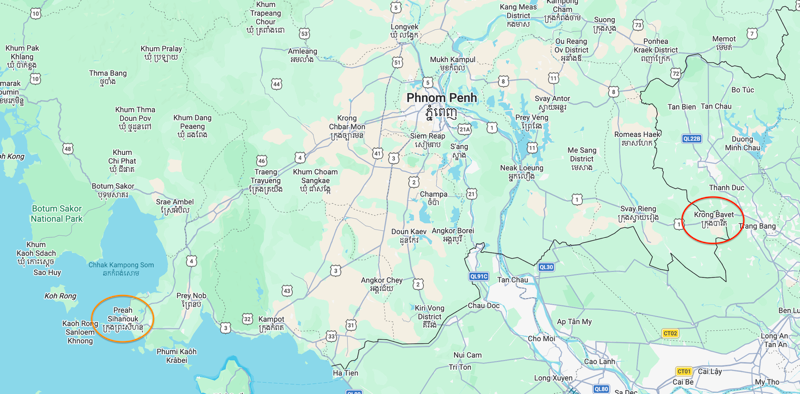
Bavet (red circle) sits directly across the border from Vietnam and is best known for its casinos, factories, and heavy Chinese influence. I had also been reading about Cambodia’s crackdown on scam centers, and someone I had briefly dated in Vietnam had mentioned that her company operated a factory there.
In the image above, I orange circled the other (now defunct?) scam town that supposedly moved operations to Bavet after the police crack downs in the region.
That combination made me curious. What was Bavet actually like?
Most foreigners I know don’t spend any time there. Depending on your Vietnamese immigration status, crossing the border can be remarkably uneventful: leave Vietnam, enter Cambodia, turn around, and come back. In some cases, people barely make it beyond the immigration buildings.
My situation was different. As an American, I sometimes have several business days between Vietnamese visas unless I arrange them back-to-back. Rather than rush home, I decided to wander around.
I ended up visiting Bavet twice.
First impressions: a town that feels past its peak
My first visit was uncomfortable.
It was around 2 p.m., roughly 90°F outside, and I was alone carrying all my luggage through a town where I very obviously did not belong.
Bavet gave me the strange impression of somewhere that had once been much busier.
There were huge commercial developments, casinos, spas, restaurants, hotels, and rows of storefronts—but a surprising number of them were closed. Some areas felt almost abandoned. The locations that weren’t closed were empty. I suspect maybe the town lightens up in the evening, similar to Bui Vien in Ho Chi Minh City.
At the same time, the prices I encountered were bizarrely high compared with the rest of Cambodia and neighboring Vietnam.
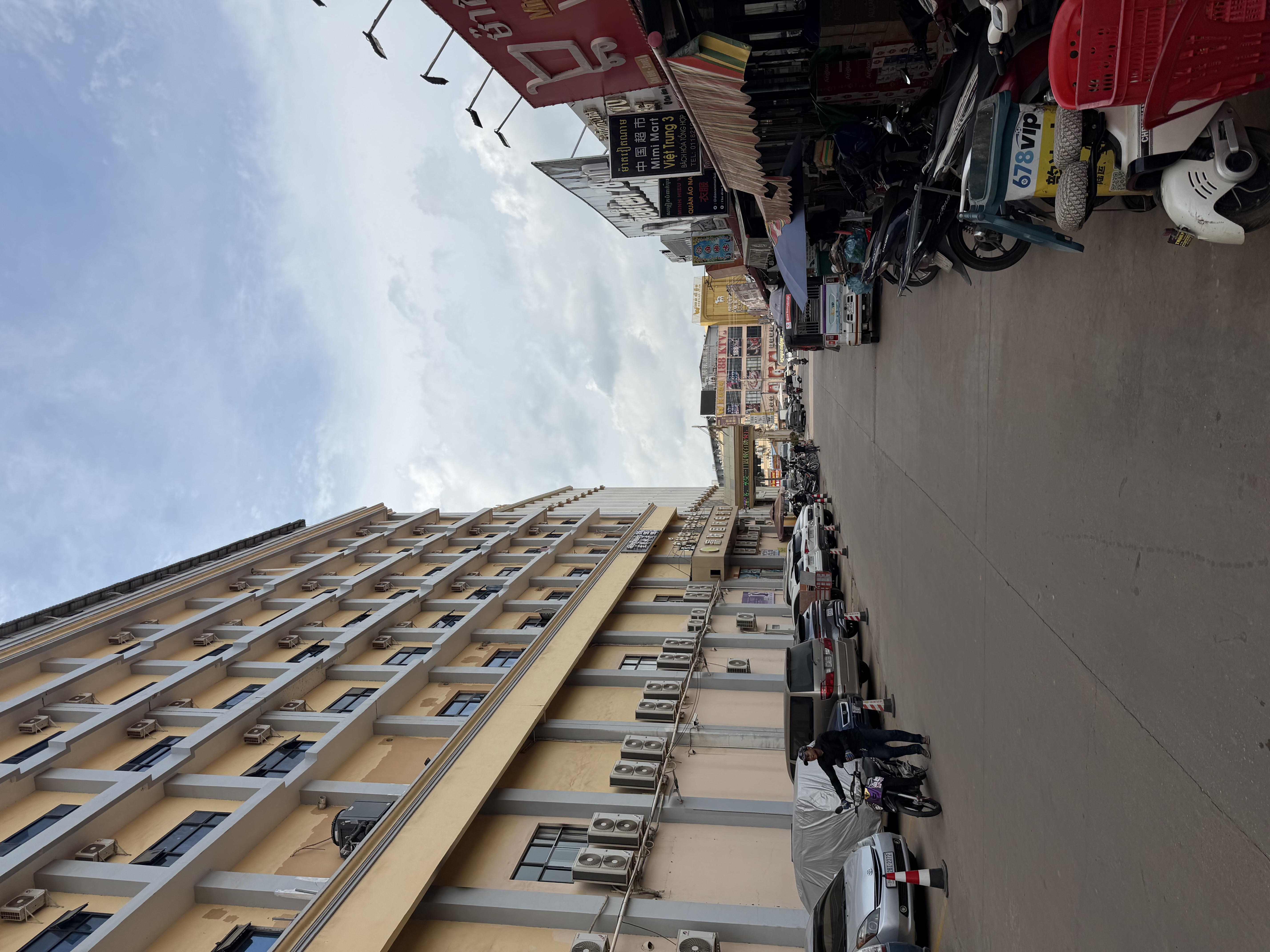
I saw a hotel advertising rooms for around $1,000 usd per month. My 2 bedroom “luxury” apartment in Ho Chi Minh City, Vietnam, with community pool, gym, and walking distance to the heart of the city costs $780 usd (including utils).
In Bavet, a one-hour foot massage was quoted at $30usd. For comparison, I’d expect to pay roughly $5–10 in Phnom Penh, or around $12-16 usd (350k vnd) in the tourist areas of Ho Chi Minh City.
Chinese was everywhere. Khmer was probably second, followed by Vietnamese. English was noticeably uncommon.
At a restaurant, I spoke with one of the staff members, who seemed genuinely confused about what I, a westerner, was doing there. She told me she only saw Chinese, Vietnamese, and Cambodian visitors, but no westerners.
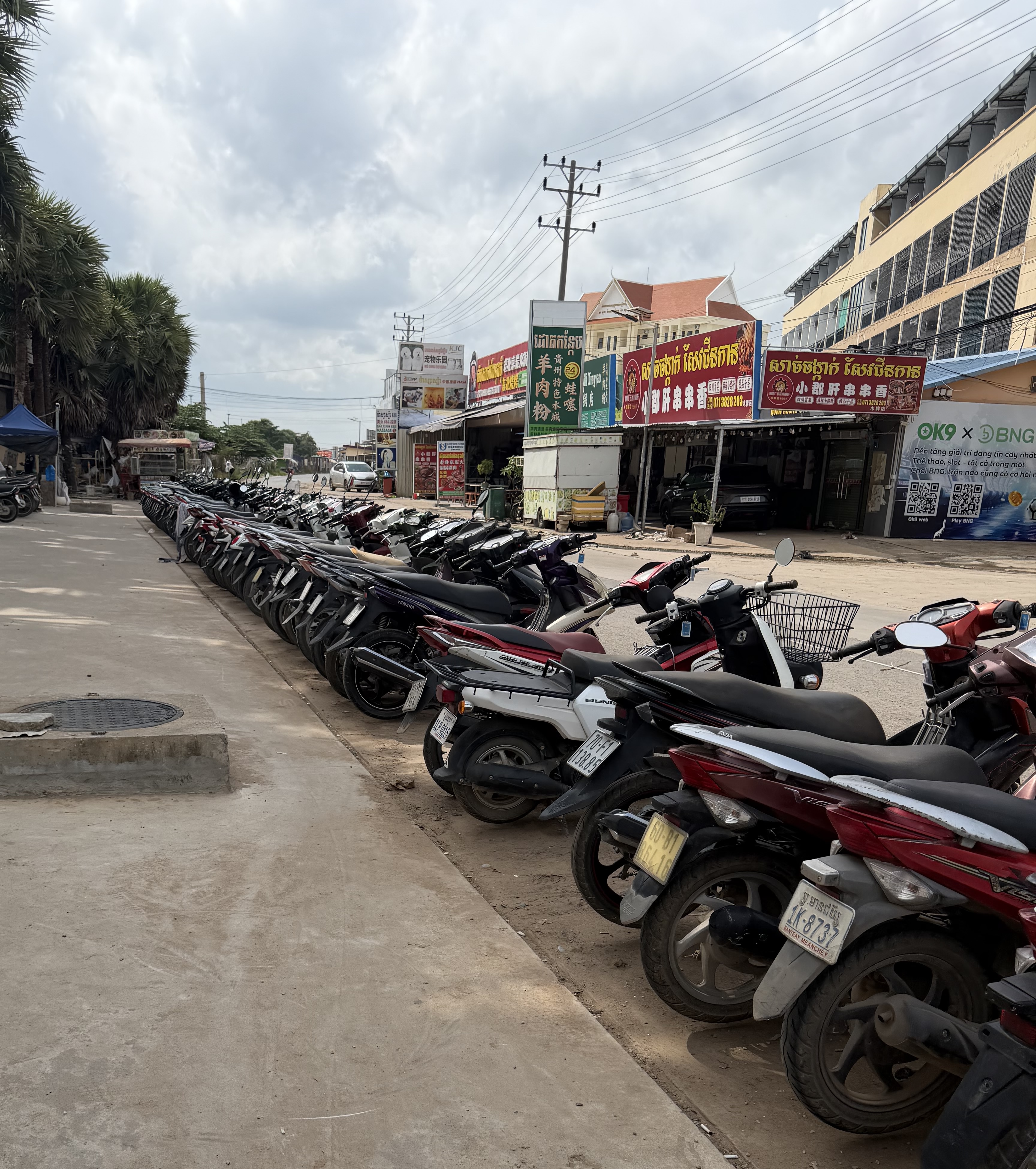
The parking areas around the casinos were full of motorbikes, and by my very rough estimate, perhaps 80% had Vietnamese plates. It appeared that plenty of people were crossing over from Vietnam to gamble.
One upside of all that Chinese influence: the genuinely excellent dumplings.
A black hole on the Western travel internet
Before arriving, I had considered spending the night in Bavet, but finding somewhere online was surprisingly difficult.
Western booking platforms showed some of the larger casino hotels, but none of the inexpensive local hotels or guesthouses I could clearly see while walking around town.
That was one of the strangest things about Bavet. It physically has the infrastructure of a reasonably substantial border town, yet from the perspective of the English-language travel internet, much of it barely seems to exist as a tourist town. Just something you pass wave at as you sit in your AC bus on the way to Phnom Penh or HCMC.
There were local hotels. There were restaurants. There were spas, bars, and casinos. Even bigger Casinos and hotels were actively under construction.
Going deeper the second time
On my first visit, I was nervous. I didn’t take any photos, because I feared for my safety in Cambodia. I kept my head down, walked around the main commercial areas, ate something, and found my way to the bus.
On my second trip, I felt more comfortable.
This time, before returning toward Vietnam, I explored farther into some of the developments behind the casinos.
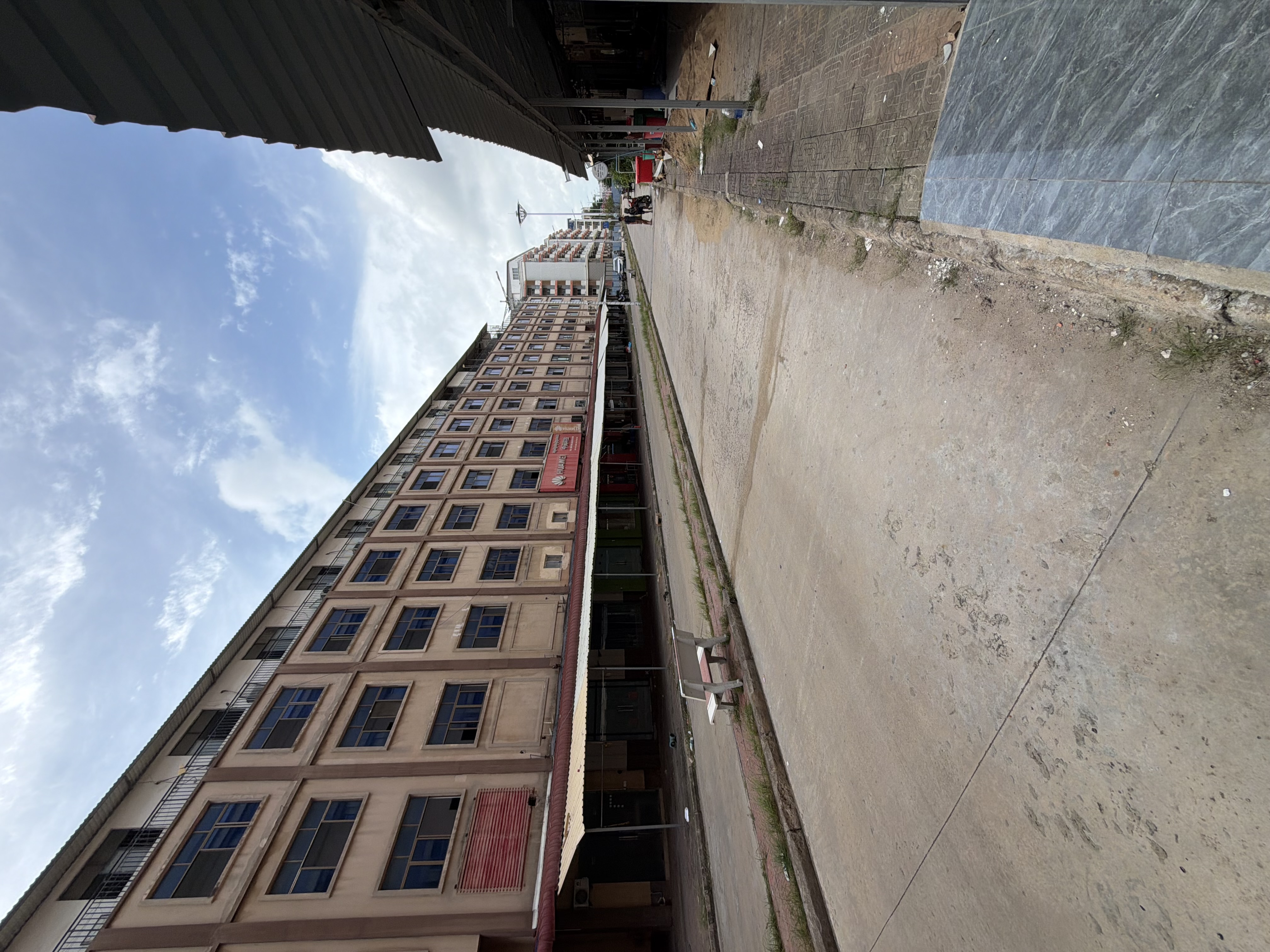
In one area, probably 90% of the storefronts appeared closed. Above them were residential-looking units, many with Chinese writing visible in the windows.
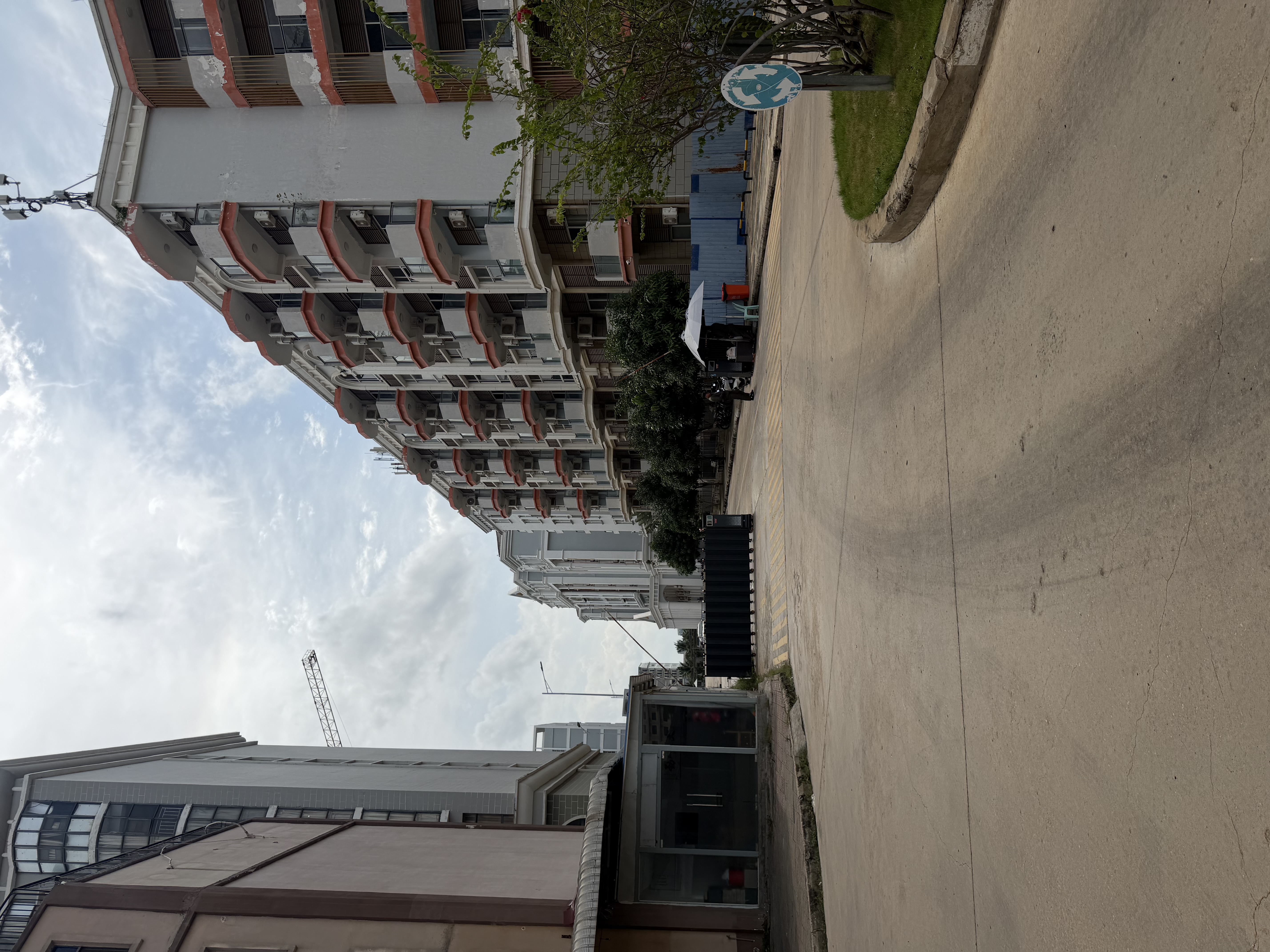
A Cambodian woman later told me that some buildings in the area had previously housed people involved in scam operations. I have no way to independently confirm which specific buildings were used for that though.
But the emptiness
There were large apartment blocks behind walls and fences. Many appeared empty. Almost every unit had its own air conditioner, so these were not bare prison cells or crude barracks. From the outside, some looked like perfectly normal apartment buildings.
Others did not.
Farther inside the complex, I came across a group of buildings surrounded by a high fence and old barbed wire. Some windows also appeared to have wire or bars over them.
The place immediately reminded me—not literally in purpose or scale, but visually—of detention sites I had visited in Poland. It was the combination of repetitive buildings, fencing, and rusting wire that created the association.
What made it particularly eerie was how empty everything felt.
A large, polished casino hotel was nearby, yet this area seemed almost completely deserted.
I started feeling very conspicuous.
The white truck
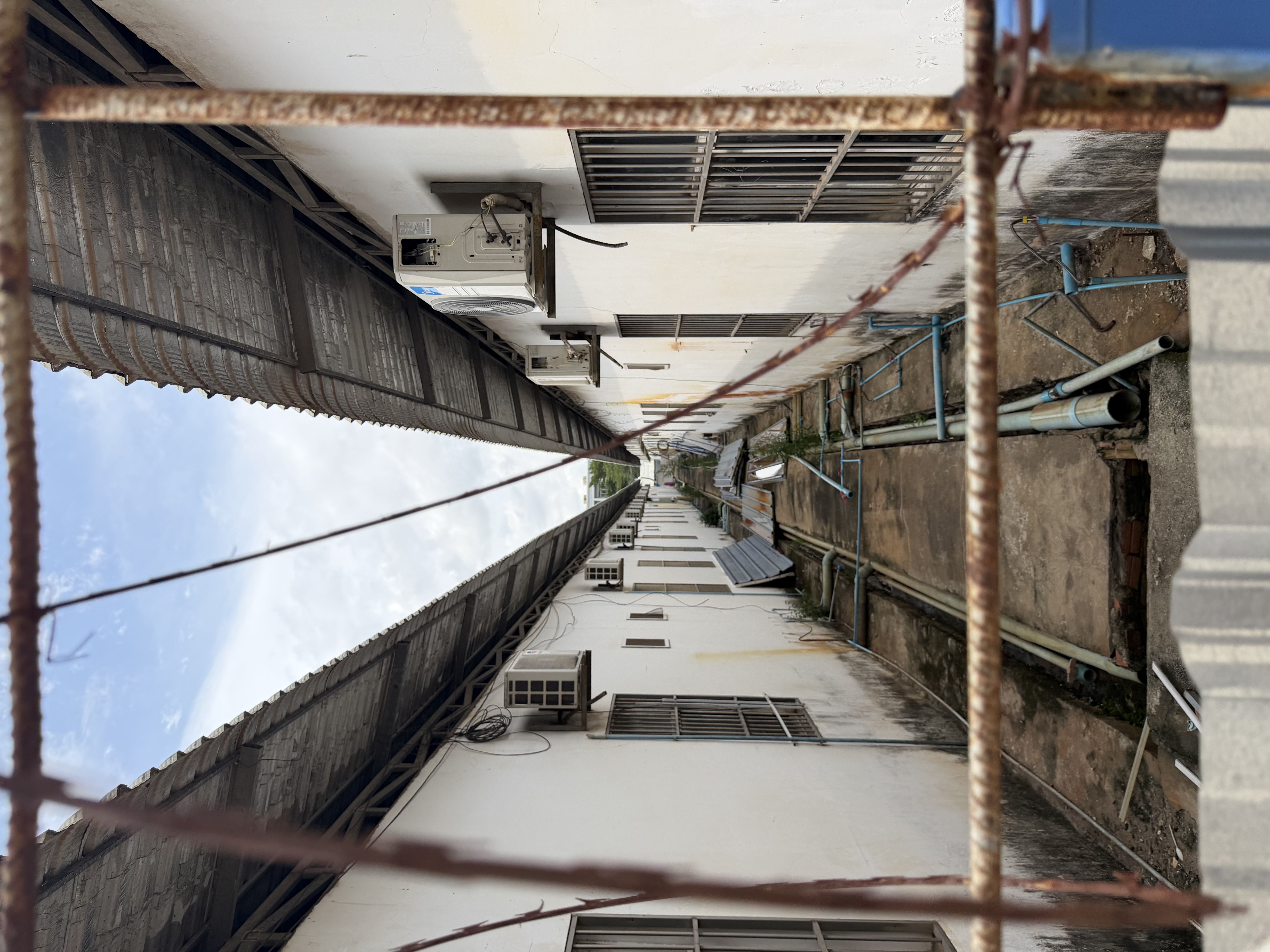
I took one quick photo, that will be my last.
Almost immediately afterward, a white pick up truck behind me honked.
It startled me enough that I put my phone away and started walking back toward the main casino area.
A man who appeared to be Chinese (tall, light skinned) exited the truck and began walking in the same direction behind me. He stayed some distance away and spent part of the time looking at his phone.
Was he following me?
I genuinely don’t know.
It might have been a coincidence. He may have had absolutely nothing to do with me.
But once I had clearly left the fenced area and was heading back toward the busier casino complex, he stopped coming in my direction.
That was enough exploration for the day.
Would I recommend visiting Bavet?
Bavet is one of the strangest places I’ve visited in Southeast Asia.
It isn’t particularly beautiful. It isn’t designed for western tourists. There isn’t much conventional sightseeing, and large parts of town feel either economically depressed, oddly secretive, or both.
But that is also what made it interesting to me.
It is a border economy shaped by casinos, Vietnamese visitors, Chinese investment, factories, and developments that seem far larger than the current level of activity would justify.
For travelers who like polished attractions, nightlife, cafés, and convenient hotels, there are much better places to visit in Cambodia.
For people fascinated by strange unwelcoming towns and places that exist almost completely outside the Western tourism ecosystem, Bavet is genuinely interesting.
Someone had warned me that exploring in a group might actually attract more scrutiny because people could assume we were journalists or making social-media content. Traveling alone may have made me less interesting—but it also meant I had nobody with me if something went wrong.
Being on foot created the same contradiction. A motorbike would have made it easier to leave quickly, but walking made me less conspicuous in some ways.
There probably isn’t a perfect answer.
My two visits to Bavet left me with more questions than answers, which may be the best description of the town itself.
It feels like a place built for a boom that has partially disappeared: casinos still operating, Vietnamese motorbikes filling the parking lots, excellent Chinese food, shuttered storefronts, expensive services, empty apartment blocks, and heavily secured compounds sitting just out of sight of the main road.
For what began as a visa run, it turned into one of the more unusual side trips I’ve taken.
More recent posts
I write practical notes on building software and products, working with AI, navigating tech careers, and designing a more intentional life.